Quick answer: a complete allotment starter kit means: a stainless spade and fork set, hand trowel, watering can, seed trays, compost, netting, plant labels, knee pads and twine. A wheelbarrow can wait until you know the plot needs one. The spade and fork set is the only place worth spending properly.
Spear & Jackson Select Stainless spade & fork set
The two tools you'll use on every single visit. Buy these well and cheap out on the rest.
As an Amazon Associate I earn from qualifying purchases.
The day the keys arrive, the temptation is to walk round the garden centre with an empty trolley and a full heart. Don't. You need far less than the shops would have you believe, and half the stuff marketed at beginners either does nothing or can wait until you know your plot.
So here's what I'd actually press into a new plot holder's hands. Ten things, every one of them useful from your first weekend on the ground.
Budget Tip
There's no rush to buy the lot. Get items 1–4 sorted first (the hand tools and something to water with) and pick up the rest as the plot tells you what it needs. Plenty of allotment societies keep a tool share or a pile of second-hand kit going spare, so ask before you spend.
Spade & Fork Set
This is the backbone of the whole thing. A full-sized spade and fork handle the digging, the turning, the spuds, the compost, pretty much every heavy job on the plot. Buy the best you can stretch to. Cheap ones bend the first time they meet a stone, and a bent fork is a useless fork. Stainless steel heads on ash handles are the old reliable, and they'll outlive you if you wipe them down and keep them dry. Skip the multi-tool gimmicks. A plain spade and a plain fork do the lot.
Check Price on Amazon (search Amazon)Hand Trowel & Fork
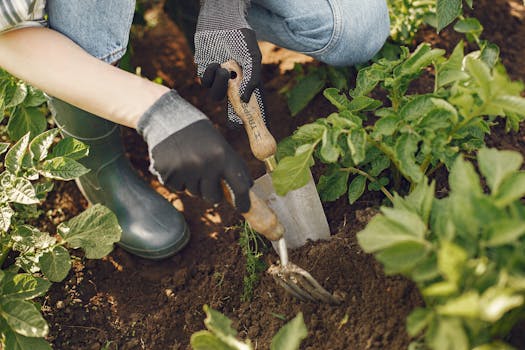
For all the fiddly work the big tools are too clumsy for: setting out seedlings, weeding in among established plants, popping in bulbs, getting into tight corners. Hold a trowel before you buy if you can, and reject any that wobble where the head meets the handle, because that's the first thing to give way. Stainless or carbon steel for the head. The hand fork comes into its own teasing soil loose around roots without tearing them.
Check Price on AmazonWatering Can or Hose
Most sites have a tap somewhere, but getting the water from the tap to your seedlings is your problem to solve. A 10-litre can with a rose on the end is where I'd start: cheap, no plumbing, and you decide exactly where every drop goes. If your plot's big or a long trudge from the tap, a hose with a spray gun saves a lot of back and forth. Check the site rules before you buy one though, plenty of places ban hoses outright.
Check Price on AmazonSeed Trays & Pots
From February you'll be sowing, and proper trays and modular cells beat yoghurt pots hands down, though I won't pretend I've never sown into a margarine tub when caught short. A few standard seed trays, some 9cm pots for potting on, and a couple of modular trays cover the whole season. Decent reusable plastic ones go on for years. A clear propagator lid is worth adding if you're starting things off on the windowsill.
Check Price on AmazonMulti-Purpose Compost
Good compost underpins everything else. The multi-purpose stuff does for sowing, potting on, filling containers and bulking up tired soil. Buy the big 70-litre bags, because you always get through more than you'd guess. Peat-free is the norm in the UK now and does the job fine. For starting seeds, a finer seed compost gives you noticeably better germination, and it's worth the extra bag.
Check Price on AmazonNetting for Pest Protection
Birds, and pigeons most of all, will strip a row of brassicas, peas or soft fruit to the stalks while your back's turned. Enviromesh or similar fine netting keeps them off while still letting light and rain through. You'll want butterfly netting over the cabbages and kale through summer too. Buy more than you think you need, stretch it taut over hoops or a frame and peg the edges down. Loose, baggy netting is what tangles birds and hedgehogs, so check it on every visit and tighten anything that sags.
Check Price on AmazonPlant Labels & Markers
You will forget what you planted where. Everyone does, and anyone who says otherwise is fibbing. Cheap plastic labels and a permanent marker are all it takes to keep track of varieties, sowing dates and which row is which. Wooden labels look lovely in the catalogue and have rotted to mush by August. Write the variety and date on each one as you sow, and you'll save yourself a lot of squinting and guesswork come summer.
Check Price on AmazonKnee Pads
So much of this job happens on your knees: weeding, planting, thinning, picking the low stuff. Go without protection and you'll be aching within the hour and thoroughly fed up by teatime. A foam kneeling pad is cheap and light, but the strap-on knee pads win for me, because they shuffle along with you instead of getting left a row behind. Future you, standing up at the end of the day, will be grateful.
Check Price on AmazonGarden Twine
Few things get used more or cost less. Natural jute twine ties plants to canes, marks out straight rows, bundles up the harvest and does a hundred odd jobs besides. Being jute, it rots down, so you can leave the ends in the soil without a second thought. Keep a ball in your coat pocket or hang one in the shed, because you'll be reaching for it all day long. A wire dispenser you stick in the ground is a nice little luxury if you fancy one.
Check Price on AmazonWheelbarrow (Optional)
A barrow makes shifting compost, manure, weeds and harvest far less of a slog, but it's not a day-one buy, especially on a small plot. Loads of new plot holders get by with bags and buckets for the first few months and never miss it. When you do come to buy, a steel-bodied barrow lasts longer than plastic and copes better with rutted ground. And ask around first, since some sites keep communal barrows you can borrow.
Check Price on AmazonWhat You Don't Need (Yet)
Hold off on the rotavator, the greenhouse, the polytunnel and the power tools until you've had a full season under your belt. Ask the old hands and they'll nearly all say the same thing: their best tool is a sharp spade and their best investment was the time spent getting to know their soil. Start simple. Buy the rest once the plot has shown you what it genuinely wants.

Putting Your Kit Together
Between them, those ten items cover the lot: breaking ground and prepping soil, sowing and planting out, watering, keeping the pests off, and the day-to-day pottering. Kit yourself out with these and there's nothing a first season can throw at you that you can't meet.
If you want to go deeper on choosing tools, our full recommended tools guide has you covered. And if the plot's still a way off, the beginner's checklist runs through everything worth doing before your first day on it.
Budget roughly £150–£250 for the full kit if buying new. You can reduce this significantly by buying second-hand, borrowing from allotment neighbours, or picking up tools gradually over the first few months.
Five Things You Can Skip in Year One
Most starter lists are padded, and a fair bit of what they push is stuff you'll buy twice: once because a list told you to, and again properly when you find out what you actually need. Leave these until year two.
- A rotavator. Tempting on a weedy plot, but it chops perennial roots like couch grass and bindweed into hundreds of new plants. Cover the ground instead, or dig it over across a winter.
- A greenhouse. Big spend, and you won't know where it should go until you've grown a season and worked out where the light and the wind actually are. A few cloches do the job in the meantime.
- A full irrigation system. Worth having eventually, but the first thing to sort is somewhere to store water. Get a butt up, then automate the delivery once you know which beds dry out fastest. Our allotment watering guide covers what to buy when.
- Named-variety seed collections. A cheap mixed pack teaches you as much in year one, and you'll have your own opinions about varieties by the end of it.
- A shed, straight away. Check the site rules and see what your neighbours store where. Plenty of plots run fine on a lockable storage box for the first season.
The pattern is the same each time: the plot tells you what it needs once you've worked it for a few months, and anything you buy before that is a guess.
Kitting out somebody else? The same logic makes for better allotment gift ideas, because the things a new plot holder won't buy for themselves are usually the ones worth giving.
Frequently Asked Questions
As an Amazon Associate I earn from qualifying purchases. This does not affect the price you pay. We only recommend products we believe are genuinely useful for allotment growers.